Experiments with everyday objects to help understand gravity - Barry Gray 27/2/2026
ABSTRACT
Some experiments that can help in the way you think about gravity.
Experiments with a spring
I have a spring that was advertised as 10cm that when laid flat on the the table looks like this:
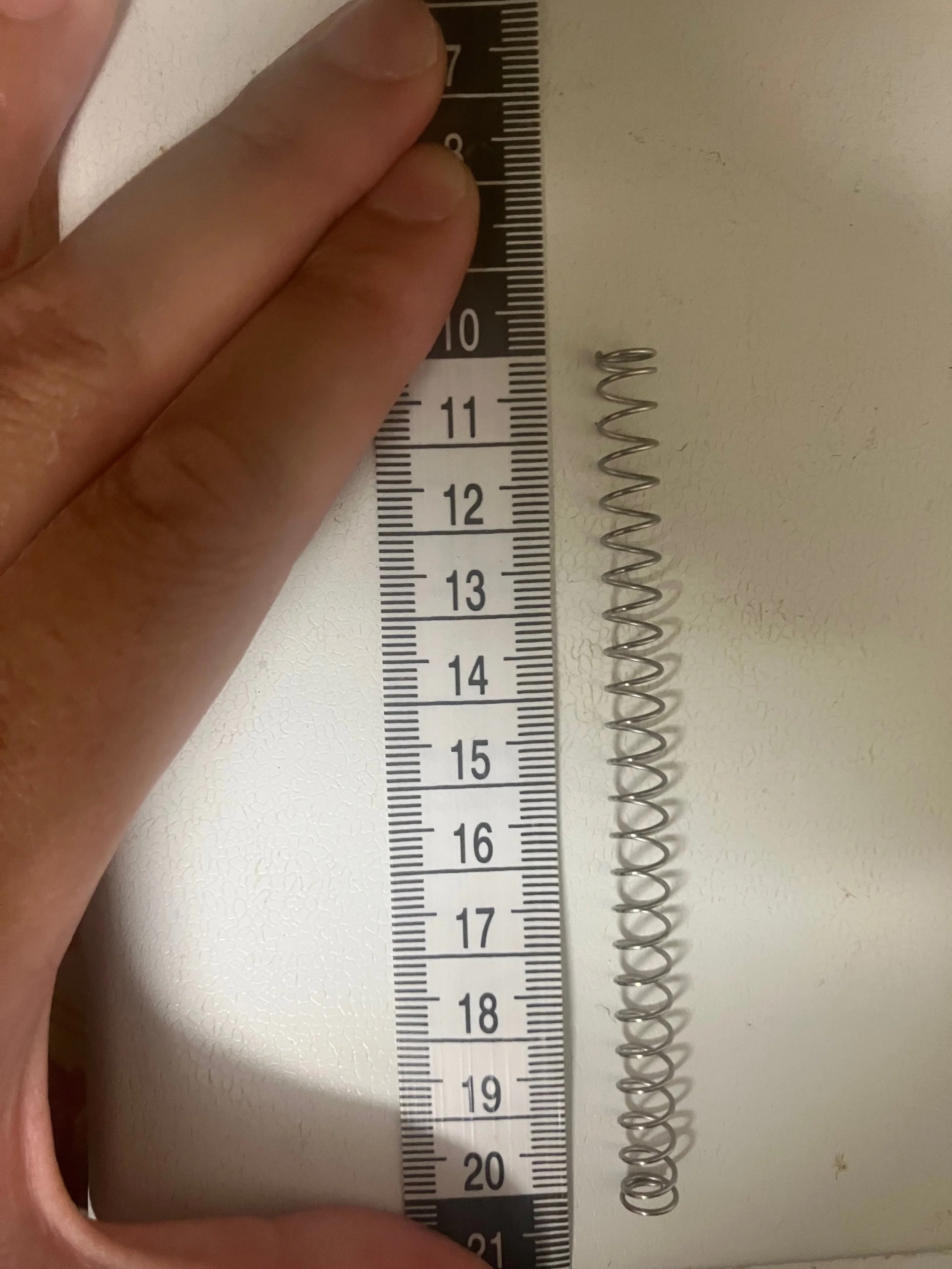
So I think at equilibrium it is 10cm.
When it is suspended the spring is stretched to maybe about 102-103 mm. I think someone was thinking in the way of Einstein would say that I am accelerating upwards and so the spring is stretched due to this acceleration at the top.
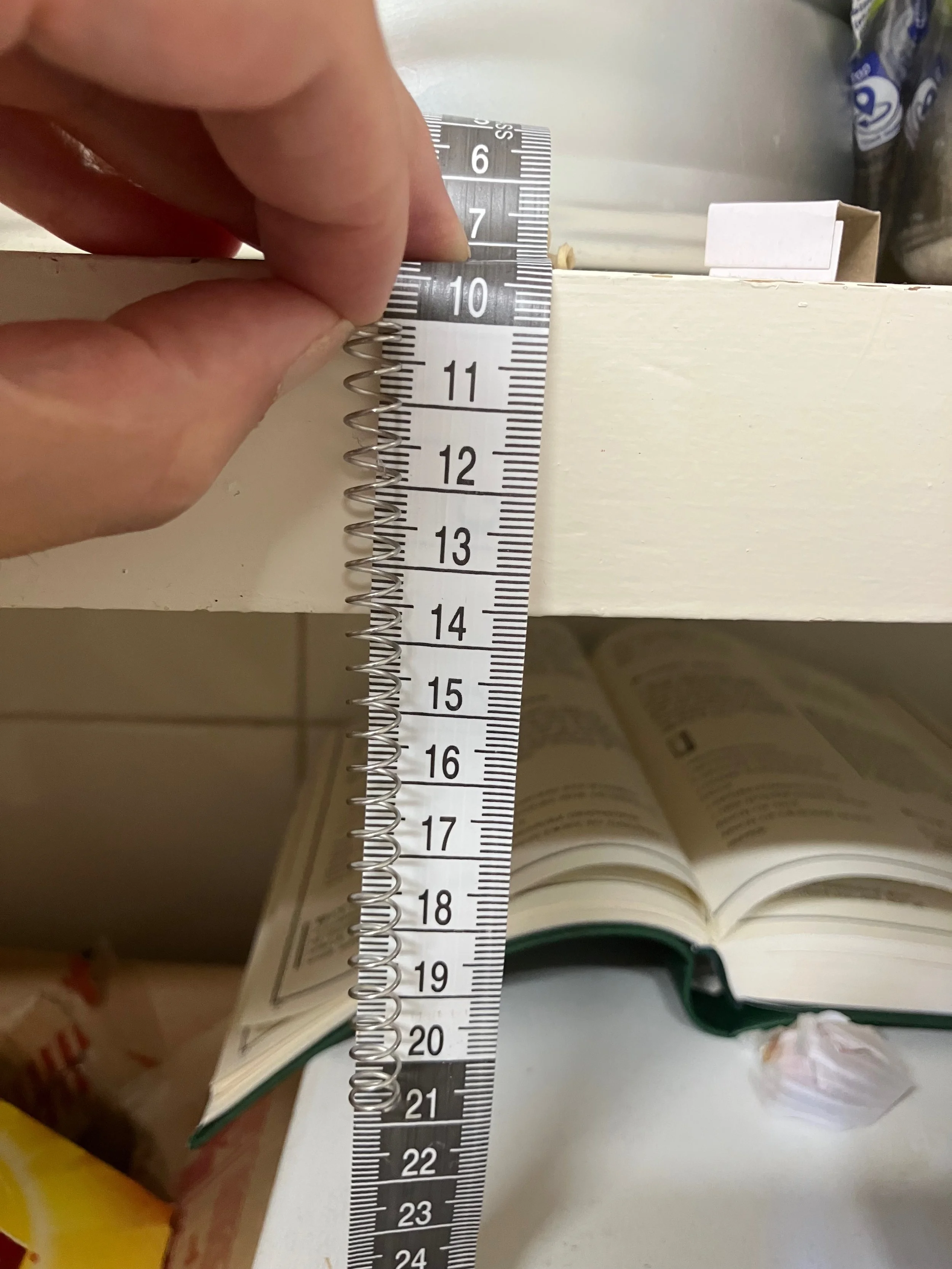
It is less clear what is going on if the spring is stood on the table upright, perhaps it is harder to compress the spring than to expand it, as the spring is only slightly compressed.
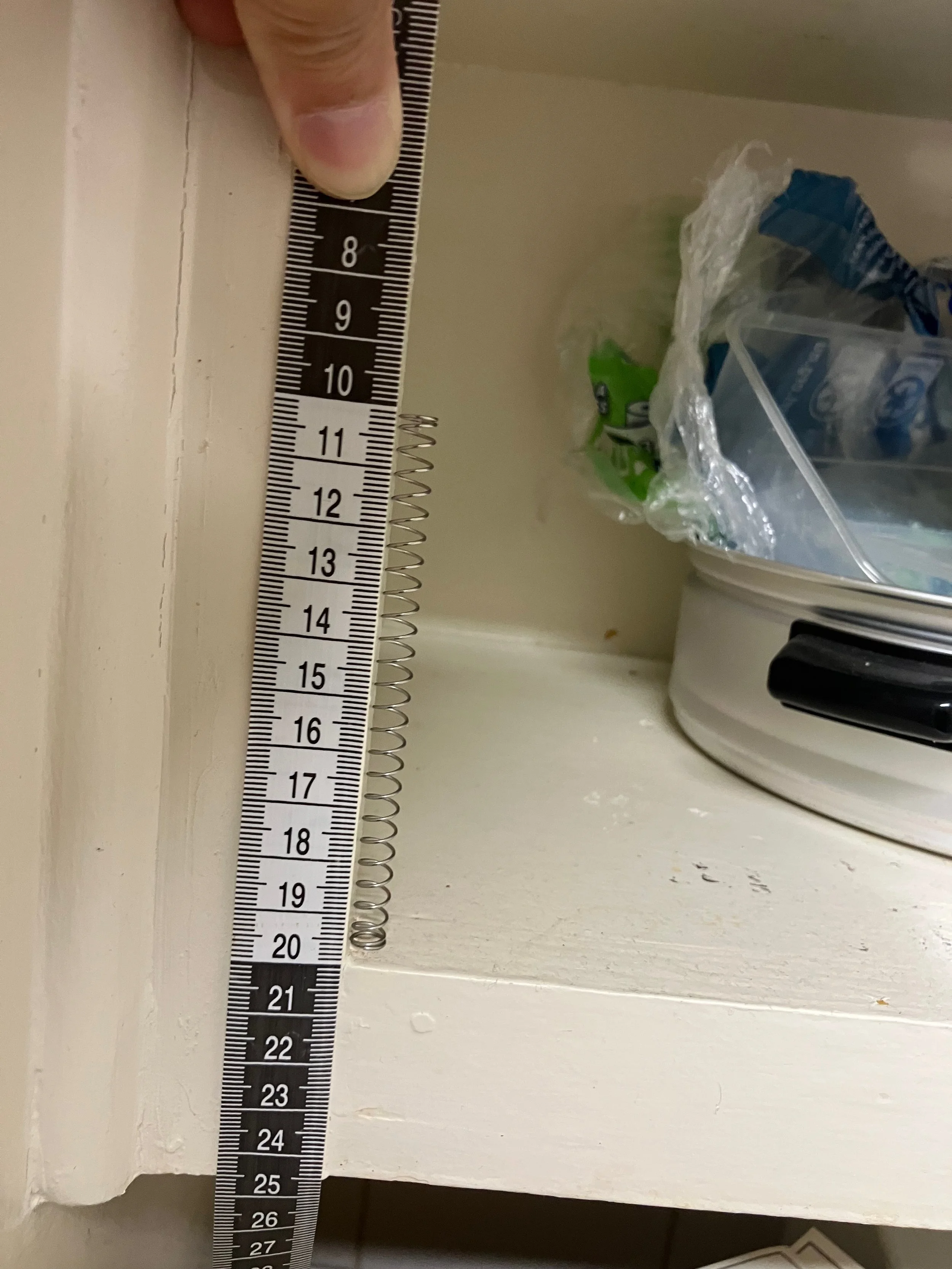
When dropped from a height the spring is about 10cm long. This is because in free fall there is no force acting on the spring so it should be the same length as it’s equilibrium as when it is laid flat on the table.

Video of the previous picture:
2. Experiments with accelerometer on a phone
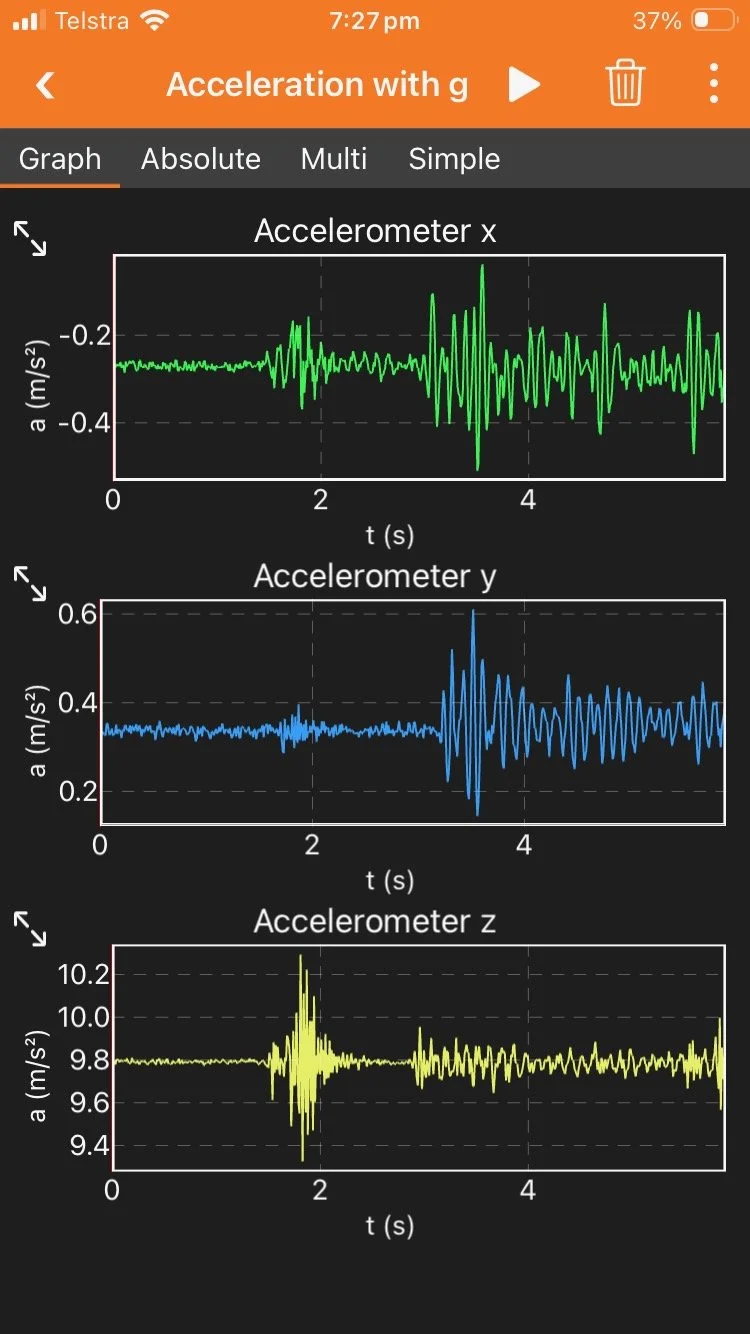
As the following shows, the accelerometer on a phone is about 9.8 m/s2 in the direction up (z direction) when the phone is flat face up on the table (this is with the sensor not subtracting the gravitational force).
3. Conclusions
These experiments are just to help you think about how gravity might work according to general relativity. When you are holding the spring from the top you are accelerating upwards and so the spring will get longer as the top is accelerating up. To see why I am accelerating just by standing still on earth I have found the following YouTube video helpful:
When the spring is dropped since there is no longer any force acting on it, it will act be at its equilibrium length (the same as if it was lying flat on the table, as is my understanding).
The data from the accelerometer shows that the phone is accelerating upward when it is lying flat on the table.
Thanks to Sabine Hossenfelder for her ideas in the video she made about gravity:
4. References
Sabine Hossenfelder - Gravity is not a force. But what does that mean? - Youtube:
Sensor software for phone used from RWTH Aachen University -
ScienceClic English - YouTube - Gravity visualisation YouTube: